
 Available in GB
Content
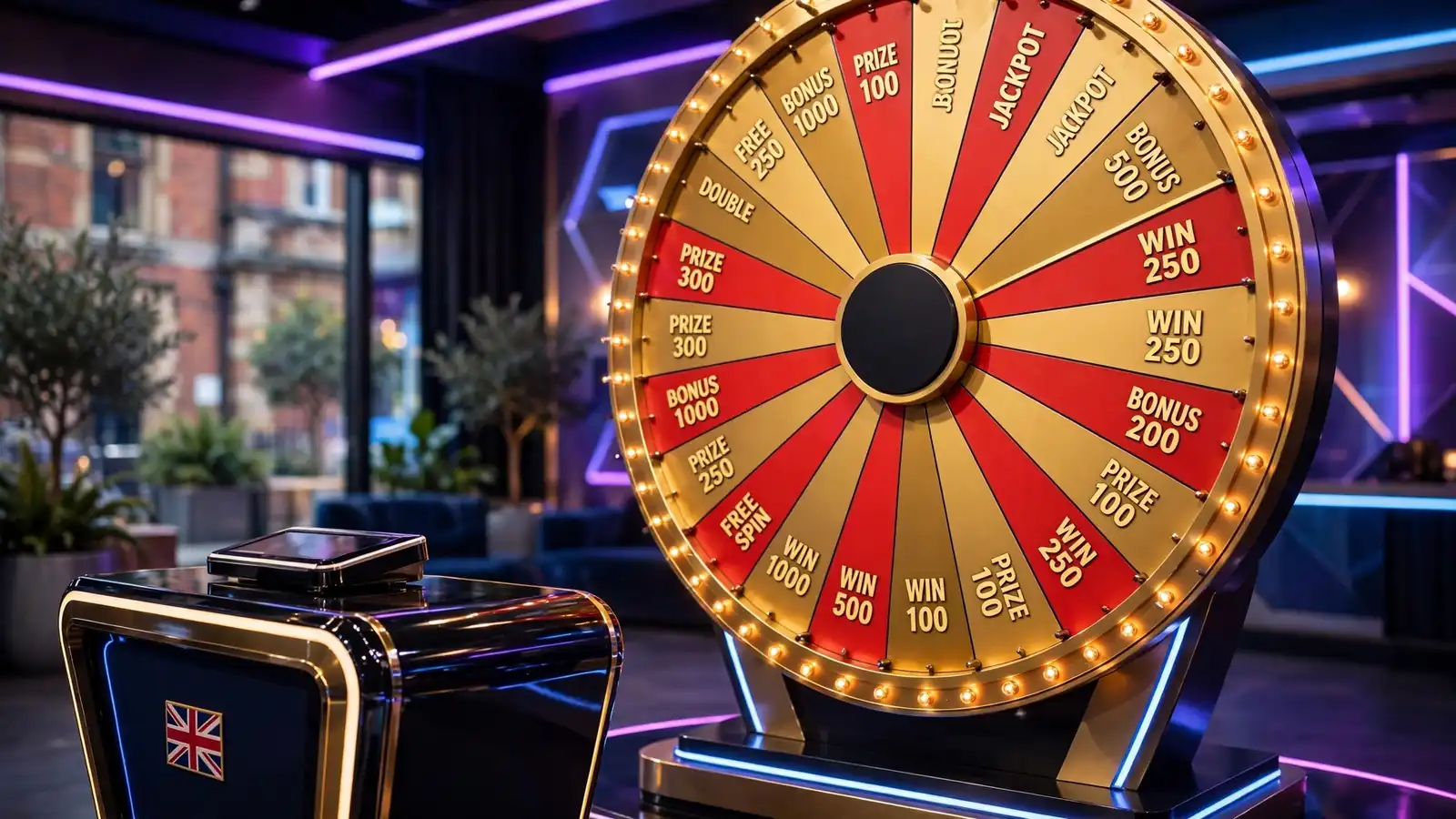
Game-show branding describes a style of presentation, while rules, player choices and how a title fits into a casino need separate consideration.
How Online Casino Game Shows Differ from Standard Live Casino Tables
The distinction is best understood as one of presentation and emphasis, not as a guaranteed difference in rules. A standard live casino table is presented primarily as a casino game played in a live setting. A game show, by contrast, is described through the language of entertainment as well as gambling. That label signals a different style of presentation, but it does not, by itself, tell you how a particular title works.
This matters because “game show” can sound like a precise category when it may be used more broadly. The name alone does not establish what you will see, what decisions you can make, or how outcomes are determined. Nor does “live” settle those questions. It describes an aspect of how the experience is presented; it is not a complete explanation of the game’s rules or operation.
A useful starting point is therefore to separate three things that can be blurred together: the game’s underlying rules, the way it is presented, and the choices available to you. A title’s description may make one of these more prominent than the others. For a conventional live table, the casino-game identity is usually the clearest part of the label. For a live game show, the entertainment framing may be more prominent. But neither label is enough to establish the details. You need the rules and instructions for the individual title before drawing conclusions about play.
The label describes an emphasis, not a rulebook
The term “standard live casino table” points towards a familiar kind of casino presentation: a game organised around its rules and a table-based setting. Calling something an online casino game show puts more emphasis on its show-like presentation. These descriptions help orient you, but they are not substitutes for the title’s actual information.
In particular, the category name cannot tell you whether a game includes a host, uses a particular set of equipment, offers a certain type of decision, or follows a specific sequence. Those are details of an individual product. They should not be inferred from the words “game show” or “live” unless the product’s own description confirms them.
The same caution applies to expectations about interaction. A show-like title may sound as if the player participates differently from someone at a conventional table, but the label does not tell you what participation means in practice. It does not establish whether you make choices, when you make them, or how those choices affect the result. Only the stated rules can answer that.
This is why a broad comparison should not turn into a list of supposed features. There is no single feature that the words “casino game show” guarantee. One title may be presented in a way that feels clearly distinct from a table game; another may be easier to understand only after you have read its instructions. The useful distinction is about the experience’s framing, while the exact mechanics remain specific to the title.
What “live” does and does not tell you
“Live” is often treated as if it explains the whole experience. It does not. In a product description, the word indicates that the title is being presented as a live casino experience, but it does not independently define the rules, the role of any presenter, or the way a round proceeds.
That distinction is important when you compare live casino game shows with conventional live tables. Both descriptions include the word “live”, so that word alone cannot explain what separates them. The more relevant contrast is how the product is framed: as a casino table game, or as a game-show-style experience. Even then, the framing gives you a broad orientation, not a complete specification.
A clear product description should make the practical details available separately. You should be able to identify the rules that govern a round and understand what the player is expected to do. If the description relies mainly on promotional language, the title’s category may be clear while its operation remains unclear. In that situation, the right response is not to fill in the blanks from assumptions about other games. It is to consult the title’s instructions.
Attention: A show-like presentation does not change the fact that the title is a casino product; gambling rules still apply regardless of the format.
This approach also prevents a common misunderstanding: treating “show” as proof that the experience is less dependent on gambling rules than a table game. A different presentation does not, on its own, change the fact that the title is offered as casino play. The rules still matter, and the description should not be read as a promise that a particular format is more interactive, more social, or easier to follow.
Entertainment framing and casino-game structure
A game-show presentation can change what draws your attention. The language may highlight the show-like character of a title rather than foregrounding the kind of table-game identity that a player recognises from conventional live casino products. That difference in emphasis can affect how you approach the description: you may first notice the entertainment concept, then need to look for the rules that explain the actual play.
The two layers should remain separate in your mind. Presentation is what the product appears to be like; rules define how it operates. A lively or distinctive presentation does not tell you whether the underlying play is simple or complex. A familiar table presentation does not, by itself, prove that you already understand every rule either. Familiarity with a category can help you know what to look for, but it cannot replace reading the specific instructions.
Amatic Online Casinos UK: Licensing and Game Checks
This separation is useful when a title is promoted as one of the best online casino game shows. “Best” is a judgement, not a mechanical description. It cannot tell you whether the game suits your preferences, how its rounds work, or whether you will understand its rules. Those questions require information about the individual title, rather than the broad category label.
The same applies to phrases such as “online casino live game shows” or “live game shows casino”. They can refer to a general kind of product, but the words do not identify a shared set of mechanics. Treat them as signposts to a style of presentation. Then look for a title-specific explanation before deciding what you expect from the experience.
Why a familiar table is a different point of reference
A conventional live casino table provides a useful point of comparison because its identity is tied closely to the casino game being played. The table-game label gives you a broad idea of the product’s focus. It does not guarantee that every version follows rules you already know, but it points your attention towards those rules.
With game-show titles, the entertainment framing may be more visible in the name or description. This can make the product feel less like a direct presentation of a standard table game, but that impression should not be mistaken for proof of a particular design. A title may differ in its presentation without changing every other aspect of play; alternatively, its rules may also be distinct. The label alone cannot tell you which is true.
Do
- Base your understanding on the stated rules
- Treat framing as a broad orientation
Don’t
- Assume the label guarantees specific features
- Confuse entertainment framing with mechanics
So the comparison is not simply “table games have rules, while game shows have entertainment”. Both are casino products, and both need to be understood through their rules. The difference is that the game-show category signals a stronger show-like framing, whereas a standard live table signals a more directly table-centred framing. These are broad descriptions of emphasis, not claims that every title in either group behaves in the same way.
If you are used to live tables, that experience may help you understand what information to look for, but it should not lead you to assume that a game-show title follows a familiar structure. Likewise, if you are drawn to a show-like presentation, do not assume that its rules will be self-explanatory. A title’s visual or verbal framing can make it appealing; its instructions are what tell you how it works.
Reading category names without over-interpreting them
Product names and category labels are compact. They are intended to identify a type of experience quickly, not to provide a full explanation. That means a short description can tell you that a title is being presented as a live casino game show while leaving important details to its dedicated rules or help material.
Read the wording at face value, but do not extend it beyond what it says. “Game show” indicates a show-like framing. It does not confirm any particular format. “Live” indicates a live presentation, but it does not specify all the ways a player may interact with it. “Casino” places the product within casino play, but it does not explain the title’s individual rules.
This is also why a general search for the best live casino game shows can be a starting point rather than a final basis for choice. A category label can help you find the kind of experience you have in mind. To understand a particular title, you still need its own explanation. The relevant information is not interchangeable between products just because they share a label.
Amatic Online Casinos in the UK: How They Work
Avoid making assumptions from a title’s name, theme, or promotional description. A name may suggest a concept without describing the sequence of play. A description may focus on atmosphere without setting out the decisions available to you. If you cannot tell how a round works from the material provided, the category label has not answered that question.
A practical mental model
Think of a live game show as a casino product whose presentation is framed in show-like terms, and a standard live table as one framed more directly around a casino table game. Then treat that distinction as a starting point, not a prediction. It helps you understand why the categories may feel different, but it does not tell you the mechanics of a specific title.
For any individual game, keep the presentation and the rules in separate mental boxes. The presentation tells you how the product is positioned. The rules tell you what happens during play. The instructions tell you what you can do and what you need to understand before taking part. Confusing these layers can create expectations that the title’s actual rules do not support.
That is the core difference: game-show language puts more weight on the entertainment framing, while standard live-table language puts more weight on the casino-game setting. The categories can help you describe what kind of experience you are looking at, but neither one guarantees a particular format or set of mechanics. To know how a game works, rely on its own rules rather than assumptions drawn from its category.
Recommended online casinos
- WinBeastBonus: €5000 + 500 FS + €650 Freebet · Payout speed: 1-3 business days
- DieselwinBonus: Welcome Pack 250% up to £4000 + 200 FS · Payout speed: 1-3 business days
- BritsinoBonus: Welcome Package – Get your £2,200 + 2,000 FS · Payout speed: 1-3 business days
- SlotoSportBonus: 500% up to £ 10 200+ 777 FS · Payout speed: 1-3 business days
- NightWinBonus: £900 + 400 free spins · Payout speed: 1-3 business days
- SpinFormulaBonus: 550% Up To £15,000 + 550 FS · Payout speed: 1-3 business days
- JetsetspinsBonus: 200% Bonus + 100 Free Spins + Free Royal Wheel · Payout speed: 1-3 business days
Checking UK Casino Licensing Before You Play
When you compare online casinos that advertise live game shows, check the operator’s regulatory status before considering the games or other features. A casino’s website, app or game lobby tells you what it presents to customers; it does not, by itself, establish that the business is authorised to offer remote gambling in Great Britain. That distinction matters because the licence belongs to the operator responsible for offering the gambling, not to a game category or a page on the site.
Amatic Online Casinos in the UK: How to Find Games
The UK Gambling Commission (UKGC) regulates gambling activity in the United Kingdom, including online casinos. For remote gambling offered to consumers in Great Britain, its remit applies even if the equipment that supports the service is located elsewhere. A company therefore cannot avoid the relevant regulatory framework simply by placing its key equipment outside Great Britain.
The Commission is the sole regulator for commercial gambling in Great Britain. It grants operating licences to businesses and personal licences to individuals who carry out relevant roles in the industry. These are different forms of authorisation: a business’s operating licence concerns its authority to provide gambling, while a personal licence applies to an individual operating within the sector. When you are assessing an online casino, the central question is whether the business offering the service has the relevant UKGC operating licence.
Identify the business behind the site
A casino brand and the legal business operating it may have different names. A brand is what you see in advertising and on the customer-facing website; the operator is the business responsible for offering the gambling service. It is the operator’s regulatory position that matters. Do not assume that a familiar brand name, a professional-looking site or a link to a game lobby proves that the business holds the required authorisation.
This distinction also helps you interpret references to providers. A game provider may create or supply software, but that does not make it the casino operator. The provider’s own regulatory status cannot substitute for the operating licence required of a business offering remote gambling to consumers in Great Britain. Equally, seeing a provider’s name or games on a casino site is not, by itself, evidence about the operator’s licence.
For a reader searching for casinos with live game shows, this means evaluating the casino business before treating its catalogue as a reason to register. The presence of a particular type of entertainment does not change who is responsible for offering the gambling. Nor does a game’s apparent availability establish that the site is authorised to serve customers in Great Britain. Licensing attaches to the business and its regulated activity, not to the label used for a game or section of a website.
Licensing Check
Ensure the business offering the gambling service holds a valid UKGC operating licence, as a brand name or professional site design does not prove authorisation.
Understand the geographic scope
The UKGC’s remote-gambling remit is based on the consumers being served in Great Britain, not on where the operator keeps its key equipment. This is a practical point when a website describes itself as international or refers to technology hosted abroad. The location of servers or other equipment does not, on its own, remove the licensing requirement for remote gambling offered to consumers in Great Britain.
Great Britain and the United Kingdom are not interchangeable in every legal context. The Gambling Act 2005 governs gambling in England, Wales and Scotland, but not Northern Ireland. The Commission’s role as the sole regulator for commercial gambling applies to Great Britain. When a casino describes its service broadly as available in the UK, you should still pay attention to which territory the statement concerns and whether the relevant operating authorisation applies to the service offered where you live.
For online casinos serving customers in England, Scotland and Wales, real-money remote gambling must be offered under the relevant UKGC licence. A company’s location abroad does not remove this requirement when it sells remote gambling into the British market. The relevant distinction is not simply domestic versus foreign business. It is whether the operator holds the authorisation required for the activity and consumers concerned.
Separate authorisation from appearance
A site may display policies, responsible-gambling information or references to regulation. Those details can help you understand how the business presents itself, but a claim on a site should not be treated as proof of its licensing position. Likewise, a casino’s inclusion in a comparison, review or game listing is not a regulatory decision. An editorial mention describes a website; it does not grant the business permission to offer gambling.
The same reasoning applies when a game is described as available at a casino. Availability and authorisation answer different questions. A title appearing in a lobby may tell you something about the site’s catalogue, but it does not establish that the operator holds a UKGC operating licence. A provider’s licence, where relevant to its own activity, is also distinct from the operator’s authority to offer gambling to customers.
Wazdan Online Casinos UK: Amatic Supplier Facts
This is why licensing is best checked at the operator level rather than inferred from the entertainment on offer. Whether a casino promotes live game shows, other casino content or a broad selection of games, the regulatory question remains: which business is offering the service, and does that business hold the required licence for remote gambling in Great Britain? Keeping those questions separate prevents a product listing from being mistaken for evidence of regulatory approval.
What the licence distinction tells you
An operating licence is authorisation for a business in relation to its gambling activity. A personal licence, by contrast, applies to an individual working in the industry. The two are not interchangeable. Seeing that a person holds a personal licence would not establish that a particular casino business has the operating licence needed to offer remote gambling. Similarly, a provider’s business activity should not be confused with the casino operator’s responsibility for the customer-facing gambling service.
This division of roles is useful when several businesses appear in the chain behind a site. The brand may be one entity, the operator another, and software may come from a separate supplier. The presence of multiple companies does not make the licensing question unanswerable; it makes identifying the operator more important. The company offering gambling to the customer is the one whose operating authorisation you need to consider.
Do not treat technical or commercial arrangements as a substitute for that authorisation. An operator may rely on external services or equipment, but the location of the key equipment does not alter the Commission’s remit over remote gambling offered to consumers in Great Britain. A supplier’s involvement does not transfer the operator’s licensing status to the supplier, and the supplier’s status does not automatically establish the operator’s.
Betsoft Online Casinos UK: What to Check
Apply the check before choosing a casino
A sensible order is to identify the operator first, establish whether its business holds the relevant UKGC operating licence, and only then assess whether the site suits your needs. This avoids spending time comparing a casino’s catalogue before resolving whether the business is authorised to offer remote gambling in Great Britain. It also prevents a familiar brand, a provider name or an appealing game section from being used as a shortcut for a regulatory check.
Be precise about what you are checking. A general statement that a site is “regulated” does not tell you which business holds which authorisation or what activity that authorisation concerns. The useful distinction is between a business’s operating licence and an individual’s personal licence, and between the operator offering gambling and the companies supplying other parts of the service.
The Commission’s role is not limited to casinos with a particular style of entertainment. It regulates gambling activity in the United Kingdom, including online casinos, and its remit covers remote gambling offered to consumers in Great Britain regardless of the location of key equipment. A live-game-show label therefore does not create a separate route around the ordinary operator-level licensing question. The same basic check applies to any online casino offering real-money gambling to customers in the relevant territory.
If a site’s branding makes the operator unclear, pause rather than guessing from the logo or the name of a game supplier. The legal identity of the business matters because the licence is held by a business, not by a visual design, product page or entertainment category. Being able to distinguish those things gives you a more reliable basis for judging whether a casino is authorised than relying on promotional language alone.
Licensing is a threshold consideration, not a recommendation that a particular casino is suitable for you. Establishing that a business has the required authorisation answers a regulatory question; it does not decide whether you want to use the site or what entertainment you prefer. Keep those decisions separate: first consider whether the operator is authorised to offer the service in Great Britain, then make any further choice on its own merits.
Regulatory Essentials
- Identify the legal operator behind the casino brand
- Confirm the operator holds a UKGC operating licence
- Distinguish between operating licences and personal licences
- Verify that the authorisation covers remote gambling in Great Britain
What to Check When Comparing Distinctive Live Game-Show Formats
A useful comparison starts with the rules, not the theme. A title or visual style can suggest what a session might feel like, but it does not tell you what choices you make, how an outcome is determined, or what happens after a result. Open the game information and check those points before treating two formats as alternatives.
Map the sequence of play
For each format, trace one complete round from the point where you can take part to the point where the next round begins. Note what the screen asks you to do, when that action is available, and what signals that the round has moved on. If the rules do not make the sequence clear, the format is harder to compare reliably.
Pay attention to where the outcome fits into that sequence. The rules should explain what determines it and how the result affects any selection or stake you have made. Do not infer a mechanic from a wheel, board, host, animation, or other on-screen feature: presentation alone does not establish how the game works.
Then compare how much of the round is active participation and how much is observation. One format may require you to make a choice at a particular point; another may place more emphasis on watching events unfold. These are questions to answer from the rules and interface of the title in front of you, not assumptions to make from the game-show label.
Amatic Online Casinos UK: Games, Bonuses and Access
Check how decisions are presented
Look for the available choices, the point at which they must be made, and whether the game explains the consequence of each choice before you commit. A clear interface should let you connect an action with its stated effect. If a button or selection is unclear, pause and consult the rules rather than relying on its colour, position, or animation.
Also check what happens if you do not make a choice in time, or if the round advances while you are reading. The rules or on-screen instructions should tell you how the game handles that situation. If they do not, you cannot safely assume that a missed action is treated as a particular selection or that the round will wait.
This matters when comparing formats with different pacing. A fast sequence can demand more attention to timing; a slower sequence may leave more room to read the interface. Neither is inherently better. The relevant question is whether you can understand each decision and act without feeling pushed into an unclear choice.
Read the rules alongside the screen
Use the information panel to check terminology, outcome conditions, and any stated limits or exceptions. Then compare that explanation with what the game displays during a round. If the screen uses a label that the rules do not explain, or if the rules describe an option that you cannot locate, treat that as unresolved rather than filling the gap with a guess.
Pay particular attention to distinctions between a visual event and a game result. An animation may make an outcome easy to follow, but it is the written rules that explain what counts and how it affects your play. Clear wording helps you understand the format before committing funds; attractive presentation does not substitute for it.
Compare Game Formats
- Trace one complete round sequence from start to finish
- Identify what determines the outcome in the rules
- Locate where and when decisions must be made
- Confirm that terminology on screen matches the information panel
- Verify the interface is readable on your specific device
Compare the viewing experience on your device
The layout can change how easy a format is to follow. Check whether the important instructions and controls remain readable on the device you intend to use, and whether the stream and interface are clear enough for you to distinguish a new decision from a change in presentation. If you need to switch between the game and its rules, consider whether you can return without losing track of the round.
Treat interruptions as a practical comparison point. Notice whether you can tell what stage the game has reached after looking away or reopening it. Do not assume that a stream pause, reconnect, or device change has a particular effect on a pending action; consult the title’s information and the operator’s help where needed.
Match the format to your own preferences
Once you understand the rules, compare how much attention each format requires, how its choices are communicated, and whether its pace suits you. You may prefer a presentation that is easy to follow at a glance, or one that gives you time to examine each decision. These are personal preferences, not evidence that one format gives you a better chance of an outcome.
Barcrest Online Casinos UK: Check Game Availability
Before playing for money, make sure you can explain the basic round sequence and the effect of your choices in your own words. If you cannot, the comparison is not complete. Choose only a format whose rules and controls you understand, and stop if the pace or presentation makes it difficult to follow what is happening.
How a Live Casino Game Show Fits into an Online Casino
A live casino game show is one part of an online casino, not a separate account or gambling service by definition. Its place in the wider experience depends on how the operator presents and supports it. You may encounter it alongside other casino content, but a label or tile in a lobby does not, by itself, explain how access works, which account functions apply, or what conditions govern play.
Treat the game, the casino account and the operator’s services as separate layers. The game is the activity you choose. The account is where the operator manages your access and gambling activity. The wider casino includes the information, tools and support that the operator makes available around that activity. Keeping those layers distinct helps you identify which terms answer which question.
Amatic Online Casinos in the UK: Games and Checks
The lobby is a route, not a complete description
A casino lobby can help you locate a live game show, but its presentation is not a substitute for the game’s rules or the operator’s terms. A title, thumbnail or category label may tell you how the operator has grouped the content; it does not establish the rules of play, the conditions for joining, or how any related account function works.
Before entering a game, look for the information attached to it and note whether it explains the play conditions clearly. If a detail matters to your decision and the operator does not make it clear, do not infer an answer from the game’s placement in the lobby. The same principle applies if the experience opens from a separate page: a different screen does not necessarily mean a different account, and the screen alone does not explain the account arrangements.
Keep game conditions separate from casino terms
The conditions for taking part in a particular game and the casino’s general account terms are not interchangeable. A game may have its own rules, while matters such as deposits, withdrawals, bonuses and customer support are handled through the operator’s services. Read the relevant terms for each issue rather than assuming that one page covers everything.
This distinction matters when a promotion is involved. A casino offer may have conditions that apply to the account or a particular product, while the game itself has separate rules. Check which activity qualifies, what restrictions apply and how the operator describes any winnings. Do not assume that taking part in a game show automatically meets a bonus condition simply because the game is available in the casino.
For customers in Great Britain, the UK Gambling Commission requires licensed operators to ask customers to set a financial limit before they make their first deposit. If you lower a limit, the change must take effect straight away. These are account-level safeguards, not rules for a particular game. You can check the account controls separately from the game’s own instructions.
New Online Casino Sites UK: How Amatic Games Fit
Check what applies on the device you use
The way a game appears on your device is part of the overall experience, but appearance alone does not tell you how it is delivered or what technical requirements apply. Use the operator’s own information to check whether the game is supported on your device and whether any settings or permissions are needed. If the page behaves differently from what its instructions describe, pause rather than assuming that a control or rule has changed.
Keep the distinction between a game’s interface and the casino account in mind. A control shown inside the game may relate to that activity; account settings may be elsewhere in the casino. When you need to manage an account setting, use the operator’s account area or support information rather than relying on an in-game display to explain the wider service.
Use the operator’s support route for account issues
If you have a question about access, payments, promotion terms or an account setting, direct it to the casino operator. The operator is responsible for the consumer-facing account and its customer support. A game’s presence within a casino does not, on its own, identify who handles a particular issue, so use the operator’s published support route and describe the specific problem.
For example, distinguish between a question about how a game works and a question about a deposit or account limit. That makes it easier to find the relevant instructions and avoids treating a game-related screen as the authority on account administration. Keep any explanation or terms provided by the operator so you can refer back to them if the issue continues.
Consider the wider safeguards
A game show sits within the wider remote gambling service, so your decisions should account for more than the game screen. GamStop is available across Great Britain’s licensed online operators as a self-exclusion service. If you use it, it applies at the operator level rather than changing the rules of one particular game.
The relationship is therefore practical: the game supplies the activity, while the casino supplies the account, terms, controls and support around it. Check each layer for the information it governs. That gives you a clearer picture of how a live game-show option fits into the casino without assuming that the lobby, game interface and account service all operate in the same way.
Are Amatic games licensed and legal to play in the UK?
Yes. Amatic holds a UK Gambling Software licence, and its games are supplied to consumers through UKGC-licensed casino operators rather than directly by Amatic.
What are the wagering requirements at Amatic casino bonuses in the UK?
From 19 December 2025, wagering requirements on bonus funds at UKGC-licensed casinos cannot exceed 10 times the bonus amount. The casino operator sets the bonus terms.
Which licensed UK casinos carry Amatic slots?
Operators listed as carrying Amatic games include Betfred, Jackpotjoy, William Hill, kwiff, PokerStars, Ladbrokes, Paddy Power, Unibet, Virgin Games, Casumo, Sky Vegas, 32Red, 888casino, bet365, Betway, Betvictor and Betfair. Check an operator’s current game or provider list before depositing, as availability can change.
How does the UK’s 10× wagering cap affect Amatic casino bonuses?
At UKGC-licensed casinos, wagering requirements on bonus funds are capped at 10 times the bonus amount. This cap took effect on 19 December 2025.